
Benchmark Sensex and Nifty closed at new lifetime high levels on Monday on foreign fund inflows and buying in index majors HDFC Bank and Reliance Industries. The 30-share BSE Sensex jumped 529.03 points or 0.80 per cent to settle at its new all-time closing high of 66,589.93. During the day, it climbed 595.31 points or 0.90 per cent to hit its lifetime intra-day peak of 66,656.20. The NSE Nifty went up by 146.95 points or 0.75 per cent to end at a new record high of 19,711.45.

RBI's exercise will take into account standards of governance, the viability of the payment bank (PB) business model, and changes, if any, if needed.

The company wants to woo post-paid customers and rent out its assets to cut debt.

For operators, occasions such as Holi, Diwali, Christmas, New Year and Independence Day spell an increase in SMSes and voice traffic and are, hence, treated as 'black out' days where they charge slightly higher SMS rates, irrespective of the tariff plan subscribed.

The combined market valuation of three of the 10 most valued domestic firms eroded by Rs 73,630.56 crore last week, with Reliance Industries Limited taking the biggest hit. While HUL and ICICI Bank were the other laggards from the top-10 pack, TCS, HDFC Bank, Infosys, LIC, SBI, HDFC and Bharti Airtel were the gainers. However, the combined gain of the seven firms at Rs 49,441.05 crore was less than the total loss suffered by the three companies.

According to rating agency Fitch, India can in the long run support five-six profitable telecom operators.
Reliance Telecom and Bharti Airtel have entered the second round of qualifying process for a GSM-based mobile license in Qatar that the Gulf country plans to award by October this year.

Indian telcos have been able to garner over 20 million 5G customers in less than four months after the official launch of the service last October, according to industry estimates. With telecom operators like Reliance Jio and Bharti Airtel aggressively rolling out their 5G services in over 190 cities across the country to date, India is now only behind China and the US in terms of the number of cities in a country where 5G services have been extended. Top executives in telcos say that the number of 5G subscribers in India is a conservative estimate and that it will rise as the roll-out gains momentum.

Dalal Street investors became richer by Rs 9.68 lakh crore in five days of market rally, where the Sensex breached the historic 73,000-mark for the first time ever to reach a new record peak, taking the market capitalisation of BSE-listed companies to an all-time high of Rs 376 lakh crore. The 30-share BSE Sensex jumped 759.49 points or 1.05 per cent to settle at a new closing high of 73,327.94 on Monday. During the day, it zoomed 833.71 points or 1.14 per cent to reach its all-time peak of 73,402.16.

From the Sensex pack, Tata Consultancy Services, Reliance Industries, NTPC, Bharti Airtel, Power Grid, Larsen & Toubro, HDFC Bank, Kotak Mahindra Bank, Tech Mahindra and HDFC were the major laggards. Maruti, Tata Motors, Titan, UltraTech Cement, Bajaj Finserv, Mahindra & Mahindra, State Bank of India and IndusInd Bank were the biggest gainers.

India's first auction of 5G spectrum, that powers ultra-high data speeds, is currently underway with a total of 72 GHz (gigahertz) of radiowaves worth at least Rs 4.3 lakh crore up for bidding. Billionaire Mukesh Ambani's Reliance Jio, Sunil Mittal-led Bharti Airtel, Vodafone Idea and a unit of billionaire Gautam Adani's flagship Adani Enterprises are in the race to bid for 5G spectrum, that offers speeds about 10 times faster than 4G, lag-free connectivity, and can enable billions of connected devices to share data in real-time. In addition to powering ultra-low latency connections, which allow downloading full-length high-quality video or movie to a mobile device in a matter of seconds (even in crowded areas), Fifth Generation or 5G would enable solutions such as e-health, connected vehicles, more-immersive augmented reality and metaverse experiences, life-saving use cases, and advanced mobile cloud gaming among others.

Spectrum auction on Thursday entered the 10th day of bidding and started off from Rs 61,091.83 crore (Rs 610.91 billion) in terms of value.

Disappointing quarterly earnings numbers and revenue forecast from IT services company Wipro also weighed on investor sentiments. The 30-share BSE Sensex fell 247.78 points or 0.38 per cent to settle at 65,629.24 points. During the day, it plunged 533.52 points or 0.80 per cent to 65,343.50 points.

Telecom services providers have urged the Ministry of Finance to suspend the universal service obligation (USOF) till the existing corpus is exhausted. In their Budget recommendations, they have also pressed for an exemption from the service tax on "assignment of right to use natural resources" and the slashing of Customs duty on telecom equipment to zero. The Cellular Operators Association of India (Coai), which represents private sector telecom operators Reliance Jio, Bharti Airtel, and Vodafone Idea, called for abolishment of USOF levy.

Trai has invited comments till January 7 on its paper on differential data pricing.
Experts argue that the cost savings both in terms of capex as well as operating costs can be substantial in the next one to two years.

Trai had asked the Attorney General for views on Jio's free voice and data offering till March 2017, that rivals have termed predatory.
Among the Sensex firms, HDFC Bank, Bharti Airtel, Infosys, UltraTech Cement, Tata Steel, Wipro, Kotak Mahindra Bank, Reliance Industries, Tech Mahindra and JSW Steel were the major laggards. Power Grid, Titan, Mahindra & Mahindra and NTPC were among the gainers.
The tariff war has now spread to all possible sections, with Anil Ambani group company Reliance Infocom on Wednesday announcing a 36 per cent reduction in ISD rates to all Gulf countries at Rs 6.99 a minute.

Ahead of its Rs 18,000 crore further public offer (FPO), Vodafone Idea on Monday said it expects to roll out 5G services in select pockets within 6-9 months of raising fresh capital. Its chief executive Akshaya Moondra said rollout of the modern 5G telecom services is one of the objectives of raising the capital from the public and once the funding comes, it will start work on the rollout. "With this round of funding, we believe we will be able to (come) back to participate in the industry growth which has not been possible," he said.

From the Sensex pack, Larsen & Toubro, JSW Steel, IndusInd Bank, Power Grid, ITC, Mahindra & Mahindra, NTPC, HDFC Bank, ITC, Reliance Industries and Tata Motors were among the major laggards. Bajaj Finserv, Asian Paints Bajaj Finance, Bharti Airtel and Axis Bank were among the gainers.

From the Sensex basket, Tata Consultancy Services, Nestle, Bajaj Finserv, Wipro, Maruti Suzuki India, Reliance Industries, Larsen & Toubro and NTPC were the major laggards. Tata Steel, Bajaj Finance, JSW Steel and Bharti Airtel were among the gainers.

Benchmark indices ended lower on Wednesday, halting their eight days of rally, ahead of the US Federal Reserve's interest rate decision and mixed global market trends. Also, fall in index majors Reliance Industries, Tata Consultancy Services, Infosys and Larsen & Toubro added to the weak trend in equities. The 30-share BSE Sensex declined 161.41 points or 0.26 per cent to settle at 61,193.30.
Mumbai has fastest 4G speed, Ahmedabad most consistent, says wireless coverage mapping firm OpenSignal

Tata Motors was the biggest loser in the Sensex pack, skidding 1.77 per cent, followed by SBI, Power Grid, Tata Steel, Infosys, UltraTech Cement, Titan, Larsen & Toubro, Reliance Industries and Maruti. On the other hand, IndusInd Bank, Bharti Airtel, Asian Paints, NTPC, HCL Technologies, HDFC and Sun Pharma were the gainers.
The Department of Telecommunications (DOT) on Wednesday received over Rs 17,873 crore from companies towards 5G spectrum dues. Nearly half the amount (Rs 8312.4 crore) was paid by Bharti Airtel, which made advance payments for four years to free up cash for future investments. Reliance Jio and Vodafone Idea paid Rs 7,864 crore and Rs 1,680 crore, respectively.

Among the Sensex firms, HDFC Bank emerged as the biggest loser, falling 4 per cent. JSW Steel, Reliance Industries, UltraTech Cement, Maruti, Tata Steel, Wipro, Tech Mahindra, Bharti Airtel and Larsen & Toubro were the other major laggards. Power Grid, Asian Paints, Sun Pharma, Axis Bank, NTPC, ITC and Infosys were among the gainers.
Mukesh Ambani-led Reliance Jio has introduced a 20-per cent cashback offer on select prepaid plans, intensifying competition in the Indian telecommunications (telecom) market. Jio is the largest telecom service provider in India, with 443 million subscribers as of July. Jio's cashback offer will drive cross-selling across Reliance's various retail businesses, but the move is also being seen by some analysts as a signal that tariff hikes may not be around the corner just yet.

Axis Bank was the top loser in the Sensex pack, shedding around 2 per cent, followed by Reliance Industries, Kotak Bank, Bharti Airtel, Titan, Dr Reddy's and M&M. NSE Nifty fell by 100.55 points to 17,898.65.
From the Sensex pack, NTPC, Tata Motors, Larsen & Toubro, Bajaj Finserv, Bharti Airtel, HDFC Bank, Reliance Industries, Titan, Power Grid and State Bank of India were the major gainers. ITC, UltraTech Cement, Tech Mahindra, Tata Steel, Wipro, Tata Consultancy Services and JSW Steel were among the laggards.

Riding on a bull run, equity investors became richer by Rs 128.77 lakh crore in the 2023-24 fiscal, driven by robust fundamentals of the Indian economy, increased investment inflows and promising corporate earnings. After a muted performance in 2022-23, equity markets made a remarkable recovery in FY24, giving handsome returns to investors. The 30-share BSE Sensex climbed 14,659.83 points or 24.85 per cent in 2023-24.

IndusInd Bank was the biggest gainer in the Sensex pack, rising 3.25 per cent, followed by Tech Mahindra, Wipro, Bharti Airtel, HCL Technologies, Axis Bank, HDFC Bank, RIL, TCS, L&T and Infosys. State Bank of India, NTPC, Maruti, Bajaj Finserv, Tata Motors and Power Grid were among the laggards, slipping up to 2.94 per cent.
From the Sensex pack, Reliance Industries jumped the most by 3.78 per cent. Tata Steel, Bharti Airtel, IndusInd Bank, Kotak Mahindra Bank, UltraTech Cement, ICICI Bank and Tata Motors were the other biggest gainers. Titan, HCL Technologies, Power Grid, Tata Consultancy Services, Wipro, Hindustan Unilever, Axis Bank and Nestle were among the major laggards.
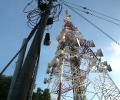
The Unified Licence for all 22 Service Areas across India will make the company the first telecom operator in the country to get pan India Unified Licence, the company said in a statement.
Benchmark indices rebounded sharply on Tuesday after falling for the past two sessions, with the Sensex rallying nearly 777 points, helped by buying in index major Reliance Industries and recovery in global markets. The 30-share BSE benchmark jumped 776.72 points or 1.37 per cent to end at 57,356.61. During the day, it rallied 862.35 points or 1.52 per cent to 57,442.24. The broader NSE Nifty gained 246.85 points or 1.46 per cent to finish at 17,200.80.
'There is no doubt at all that Jio's disruption of the mobile broadband market was a turning point for India's digital economy.'

Equity markets opened the trade on a lower note on Monday, extending the previous day's fall, with the Sensex tanking 785 points in early trade, mirroring an extremely weak trend in Asian markets. Also, unabated foreign fund outflows and selling in index majors Reliance Industries, Infosys and TCS added to the weak sentiment. The BSE benchmark Sensex was trading 785 points lower at 56,412.14. The NSE Nifty declined 243.35 points to 16,928.60

Equity mutual funds (MFs) deployed maximum in shares of Reliance Industries (RIL) in June at Rs 2,177 crore, followed by Maruti Suzuki (Rs 2,045 crore) and Bharti Airtel (Rs 1,310 crore). Shares of both RIL and Bharti Airtel have been turbulent this month. On July 1, shares of RIL crashed over 7 per cent, following the government imposing windfall taxes on domestic crude oil production and fuel exports.

Nine of the 10 most valued firms together added over Rs 2.12 lakh crore in their market valuation last week, with HDFC Bank and TCS emerging as the lead gainers. Last week, the 30-share BSE benchmark jumped 844.68 points or 1.38 per cent. The stock markets were closed on Tuesday for Guru Nanak Jayanti.

Benchmark indices ended at fresh lifetime highs on Monday amid foreign fund inflows, a decline in crude oil prices and buying in index major Reliance Industries. Rallying for the fifth day in a row, the 30-share BSE Sensex climbed 211.16 points or 0.34 per cent to settle at 62,504.80, its fresh record closing high. During the day, it jumped 407.76 points or 0.65 per cent to its lifetime intra-day peak of 62,701.40.
